Exploring the Impact of World Wars on Global Politics
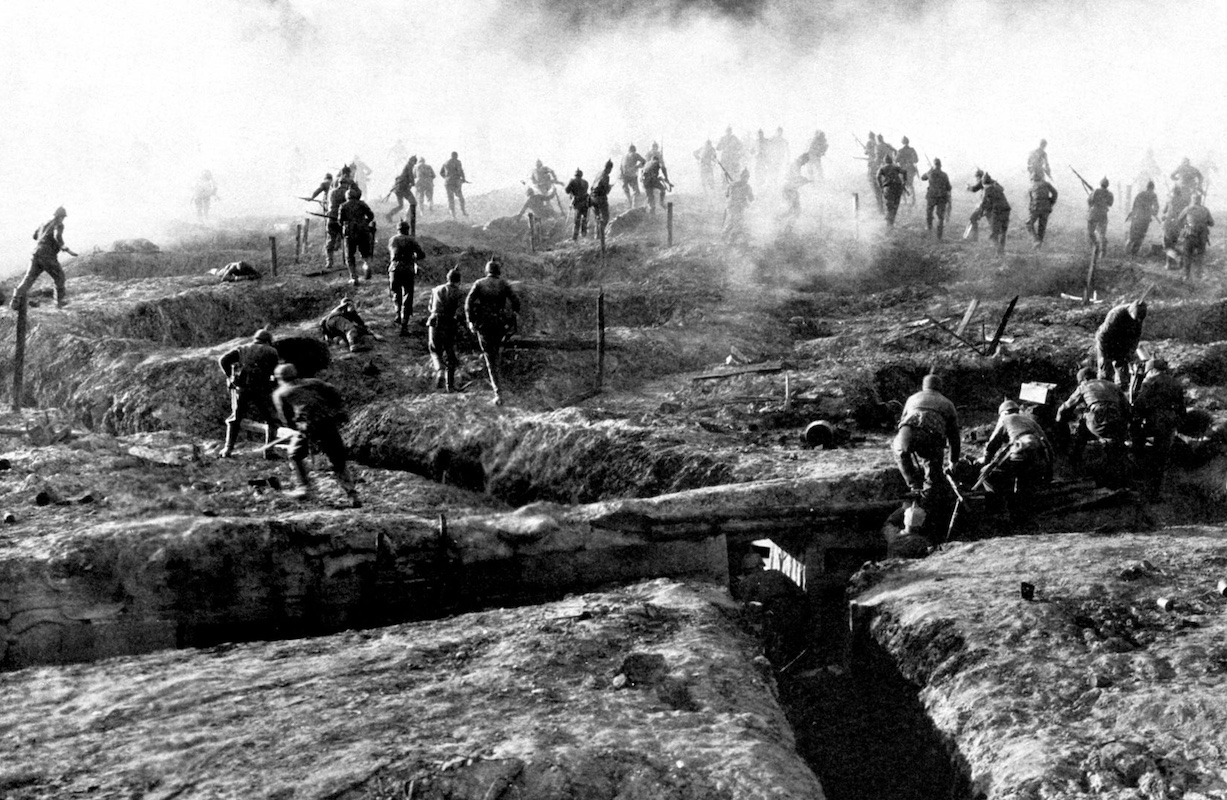
The two World Wars of the 20th century were cataclysmic events that not only resulted in unimaginable human suffering but also fundamentally reshaped the global political order. The scale of these conflicts, their global reach, and the ideologies that fueled them left an enduring legacy that continues to influence international relations and the internal politics of nations worldwide.
World War I, often referred to as the “war to end all wars,” ironically sowed the seeds for future conflict. The dissolution of major empires – the Austro-Hungarian, Ottoman, Russian, and German – created new nation-states in Europe and the Middle East, many with unresolved ethnic and territorial disputes that would contribute to future instability. The Treaty of Versailles, intended to secure peace, instead imposed harsh reparations on Germany, fostering resentment and contributing to the rise of extremist ideologies.
Furthermore, World War I led to the birth of international organizations aimed at preventing future conflicts, most notably the League of Nations. While ultimately unsuccessful in preventing World War II, the League represented a significant step towards multilateralism and the idea of collective security – principles that would be more effectively realized after the second global conflict. The war also fostered a sense of disillusionment with traditional power politics and contributed to the rise of isolationist sentiments in some nations.
World War II, a conflict even more devastating and global in scope, had an even more profound and lasting impact on global politics. The defeat of the Axis powers (Germany, Italy, and Japan) led to the dismantling of their totalitarian regimes and the establishment of democratic systems in occupied territories (though often under the influence of the Allied powers). The war also led to the emergence of two new superpowers: the United States and the Soviet Union, whose ideological clash would define the Cold War for the next half-century.
The creation of the United Nations in 1945 was a direct response to the failures of the League of Nations and the horrors of World War II. The UN, with its broader mandate and more robust structures, aimed to maintain international peace and security, promote cooperation among nations, and address global issues such as human rights and economic development. While facing numerous challenges and criticisms, the UN remains a central pillar of the contemporary international order.
The World Wars also accelerated the process of decolonization. The weakened European powers found it increasingly difficult to maintain control over their vast colonial empires in Asia, Africa, and the Middle East. The post-war era witnessed a surge in independence movements, leading to the creation of numerous new sovereign states and fundamentally altering the global map. This process, however, was often fraught with conflict and instability, partly due to the arbitrary borders drawn by colonial powers.
The ideological battles of the 20th century, particularly the struggle against fascism and later the Cold War confrontation between capitalism and communism, left a lasting imprint on political thought and systems around the world. The emphasis on human rights, democracy, and international law that emerged in the post-war era can be seen as a direct response to the atrocities and totalitarianism witnessed during the conflicts.
Moreover, the World Wars ushered in an era of unprecedented technological advancement, particularly in areas like aviation, nuclear energy, and communication. These advancements not only had military applications but also profoundly impacted civilian life and continue to shape our technological landscape today. The development of nuclear weapons, in particular, introduced a new dimension to international relations, with the threat of mutually assured destruction shaping the strategic calculations of superpowers throughout the Cold War and beyond.
The two World Wars of the 20th century were transformative events that fundamentally reshaped global politics. They led to the redrawing of national borders, the rise and fall of major powers, the creation of international organizations, the acceleration of decolonization, and the shaping of dominant political ideologies. Understanding the impact of these conflicts is crucial for comprehending the complexities of the modern international system and the ongoing challenges and opportunities in the pursuit of global peace and security.
Latest Articles
Latest Updates in Online Courses and Education.
While the names of ancient Egypt, Rome, and Greece often dominate discussions of the distant past, the world was once...
Read MoreThe term "Dark Ages" often conjures images of ignorance, barbarism, and a general decline following the fall of the Western...
Read MoreModern technology often feels like a product of pure ingenuity, a steady march of progress driven by scientific curiosity. However,...
Read MoreFor too long, the narrative of history has often focused predominantly on the actions and achievements of men, leaving the...
Read MoreMore than just a trade route, the Silk Road was a vibrant network of interconnected pathways that stretched for thousands...
Read MoreMillennia after its golden age, the influence of ancient Greece permeates the very foundations of Western thought, art, and governance....
Read MoreThe late 18th and 19th centuries witnessed a period of unprecedented transformation that we now know as the Industrial Revolution....
Read MoreThe grand sweep of history is punctuated by the ascent and eventual decline of empires – colossal political entities that...
Read MoreExploring the Ancient World: Bible History & Archaeology
Uncover the people, places, and events that shaped biblical and ancient history.
Dive into a rich collection of resources on ancient civilizations, biblical archaeology, and historical contexts. From the empires of Babylon and Assyria to the life of Jesus and the early church, discover maps, timelines, commentaries, and scholarly insights that bring the ancient world to life. Explore the intersection of faith, history, and archaeology with our curated articles, maps, and studies.