The Legacy of Ancient Greece: Philosophy, Art, and Democracy
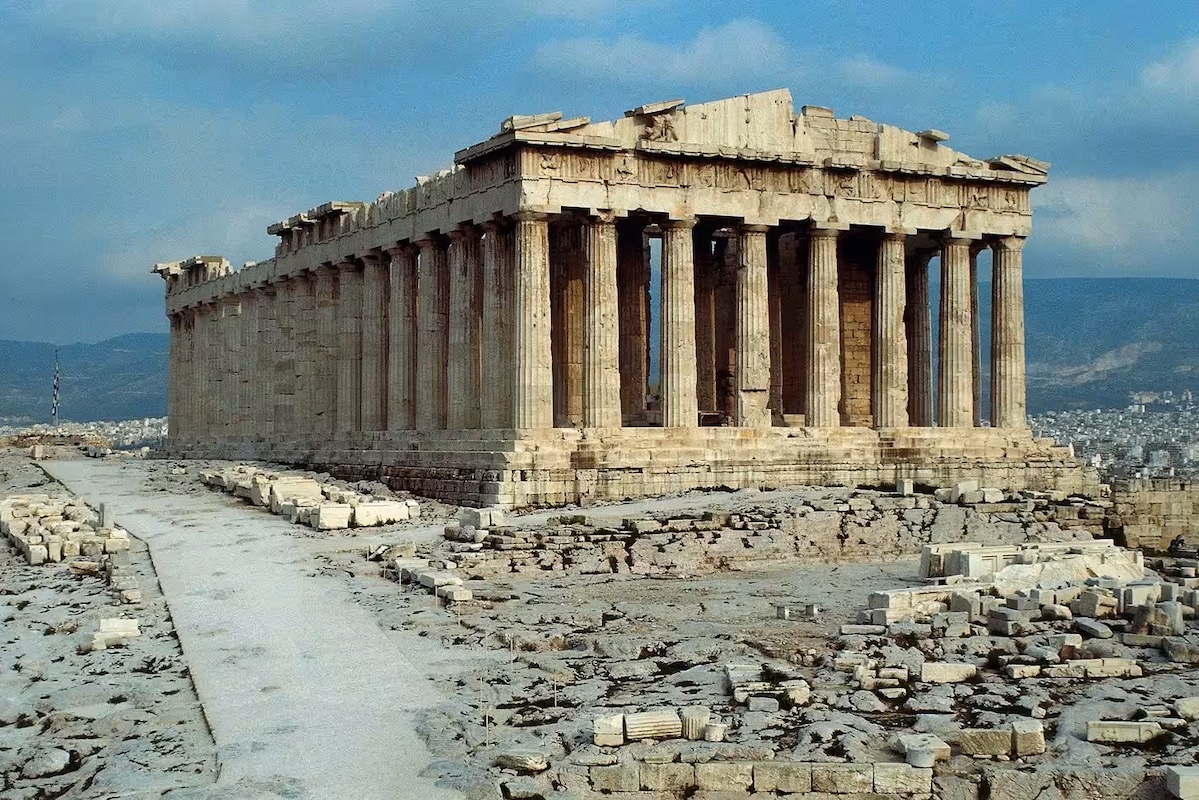
Millennia after its golden age, the influence of ancient Greece permeates the very foundations of Western thought, art, and governance. From the philosophical inquiries that continue to shape our understanding of the world to the artistic ideals that define beauty and the democratic principles that underpin modern political systems, the legacy of this remarkable civilization remains vibrant and indispensable.
Perhaps no area showcases the intellectual prowess of ancient Greece more profoundly than philosophy. Thinkers like Socrates, Plato, and Aristotle laid the groundwork for Western philosophical tradition. Socrates, through his relentless questioning, challenged conventional wisdom and emphasized the importance of self-examination. Plato, his student, explored profound metaphysical ideas, the theory of Forms, and the ideal state in his Republic. Aristotle, Plato’s student, developed systems of logic, ethics, politics, and natural science that influenced Western thought for centuries. Their inquiries into ethics, metaphysics, politics, and epistemology continue to be debated and built upon by philosophers today, demonstrating the enduring power of their intellectual contributions.
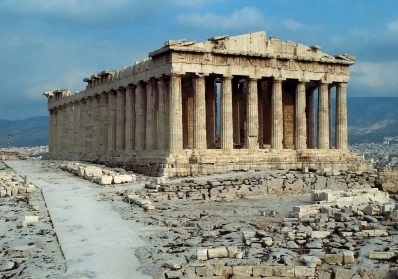
The artistic achievements of ancient Greece also left an indelible mark on Western culture. Their sculpture, with its emphasis on idealized human forms, balance, and harmony, set standards for artistic excellence that have been emulated for centuries. Masterpieces like the Venus de Milo and the Parthenon sculptures embody a pursuit of perfection and an understanding of human anatomy that continues to inspire artists. Similarly, Greek architecture, with its elegant columns (Doric, Ionic, and Corinthian), harmonious proportions, and use of marble, established principles of design that are still evident in buildings around the world. The grandeur and beauty of ancient Greek temples and public spaces serve as a testament to their sophisticated understanding of aesthetics and engineering.
However, the most politically significant contribution of ancient Greece was arguably the development of democracy in Athens. While not a perfect system by modern standards – it excluded women, slaves, and foreigners – the Athenian experiment in self-governance, where citizens directly participated in decision-making, was a revolutionary concept. The principles of citizen participation, debate, and the rule of law, though evolving over time, have their roots in this ancient Greek innovation. The very word "democracy" (from dēmos meaning "the people" and kratos meaning "power") is a testament to this enduring legacy. The Athenian assembly, the system of voting, and the concept of civic duty laid a crucial foundation for the development of democratic systems across the globe.
Beyond philosophy, art, and democracy, the influence of ancient Greece extends to numerous other fields. Their contributions to mathematics, with figures like Pythagoras and Euclid laying foundational principles of geometry and number theory, are still taught today. In literature, the epic poems of Homer (the Iliad and the Odyssey), the dramatic tragedies of Sophocles and Euripides, and the comedies of Aristophanes continue to be studied and performed, offering timeless insights into the human condition. Their advancements in history, with Herodotus and Thucydides pioneering historical writing and analysis, provided models for understanding the past. Even the Greek language itself has enriched countless modern languages, providing root words for scientific, philosophical, and political terms.
The legacy of ancient Greece is a multifaceted and enduring treasure. Its philosophical inquiries continue to challenge and enlighten us, its artistic ideals continue to inspire beauty, and its democratic experiment laid the groundwork for modern self-governance. By exploring the achievements of this remarkable civilization, we gain a deeper understanding of the intellectual, artistic, and political roots of Western culture and the timeless principles that continue to shape our world.
Latest Articles


Latest Updates in Online Courses and Education.
While the names of ancient Egypt, Rome, and Greece often dominate discussions of the distant past, the world was once...
Read MoreThe term "Dark Ages" often conjures images of ignorance, barbarism, and a general decline following the fall of the Western...
Read MoreModern technology often feels like a product of pure ingenuity, a steady march of progress driven by scientific curiosity. However,...
Read MoreFor too long, the narrative of history has often focused predominantly on the actions and achievements of men, leaving the...
Read MoreMore than just a trade route, the Silk Road was a vibrant network of interconnected pathways that stretched for thousands...
Read MoreThe two World Wars of the 20th century were cataclysmic events that not only resulted in unimaginable human suffering but...
Read MoreThe late 18th and 19th centuries witnessed a period of unprecedented transformation that we now know as the Industrial Revolution....
Read MoreThe grand sweep of history is punctuated by the ascent and eventual decline of empires – colossal political entities that...
Read MoreExploring the Ancient World: Bible History & Archaeology
Uncover the people, places, and events that shaped biblical and ancient history.
Dive into a rich collection of resources on ancient civilizations, biblical archaeology, and historical contexts. From the empires of Babylon and Assyria to the life of Jesus and the early church, discover maps, timelines, commentaries, and scholarly insights that bring the ancient world to life. Explore the intersection of faith, history, and archaeology with our curated articles, maps, and studies.