The Dark Ages: Separating Myth from Reality
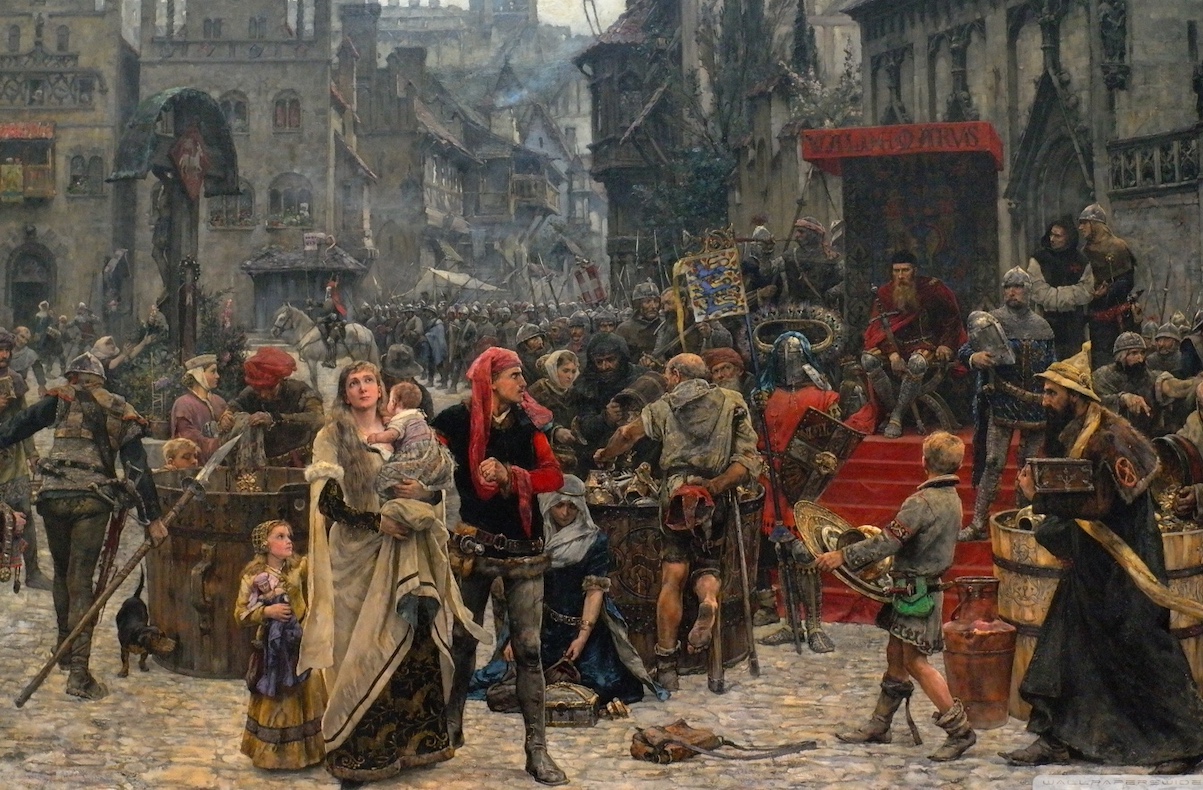
The term "Dark Ages" often conjures images of ignorance, barbarism, and a general decline following the fall of the Western Roman Empire in 476 CE. Popular culture frequently depicts this period as a bleak interlude devoid of progress, overshadowed by violence and intellectual stagnation. However, this portrayal is largely a myth, a simplification that obscures the significant developments and transformations that occurred in Europe during what historians often refer to as the Early Middle Ages (roughly 5th to 10th centuries).
One of the primary sources of the "Dark Ages" myth comes from the Renaissance humanists who looked back to the classical civilizations of Greece and Rome as a golden age. They viewed the intervening centuries as a dark period that had eclipsed the brilliance of antiquity. This perspective, while understandable in its context, has unfortunately persisted in popular imagination.
In reality, the Early Middle Ages was a period of significant, albeit different, developments. While the centralized political structures of the Roman Empire fractured, new kingdoms emerged and gradually consolidated. Figures like Charlemagne, who ruled the Frankish Empire in the 8th and 9th centuries, established a powerful realm, promoted learning through the Carolingian Renaissance, and laid the foundations for later European states.
Far from being a time of complete intellectual darkness, the Early Middle Ages saw the preservation and transmission of knowledge within monasteries. Monks diligently copied classical texts, including the works of Roman and Greek scholars, ensuring their survival for future generations. Monastic schools also played a crucial role in maintaining literacy and fostering early forms of education. While the focus of learning shifted somewhat towards theological studies, the intellectual flame was far from extinguished.
Furthermore, the "Dark Ages" witnessed significant technological and agricultural innovations. The development of the heavy plow, the three-field system of crop rotation, and the increased use of watermills and windmills led to greater agricultural productivity, supporting a growing population and laying the economic groundwork for the later medieval period. These advancements, often overlooked in simplistic narratives, were crucial for the long-term development of European society.
The period also saw the spread and consolidation of Christianity across Europe. While this process sometimes involved conflict, it also brought a degree of cultural unity and provided a moral and social framework for the emerging kingdoms. The Church became a powerful institution, wielding significant political and social influence and playing a vital role in education and charity.
It is also important to recognize the regional variations within Europe during this time. While some areas experienced instability and decline, others, like the Byzantine Empire in the East, maintained a high level of culture, learning, and economic prosperity, preserving Roman legal traditions and engaging in vibrant trade with the East. Even in Western Europe, centers of learning and artistic expression existed and evolved.
The term "Dark Ages" also fails to acknowledge the artistic and architectural achievements of the period. The development of Romanesque art and architecture, with its distinctive rounded arches and massive stone structures, laid the foundation for the Gothic style that would follow. The intricate metalwork, illuminated manuscripts, and early forms of Christian music produced during this era demonstrate a vibrant and evolving artistic landscape.
The term "Dark Ages" is a misnomer that obscures the complex and dynamic nature of the Early Middle Ages. While it was a period of significant change and adaptation following the fall of Rome, it was also a time of innovation, the preservation of knowledge, the consolidation of new political structures, and the spread of a unifying faith. By separating myth from reality, we can gain a more accurate and nuanced understanding of this crucial period in European history and its lasting contributions to the development of the continent.
Latest Articles
Latest Updates in Online Courses and Education.
While the names of ancient Egypt, Rome, and Greece often dominate discussions of the distant past, the world was once...
Read MoreModern technology often feels like a product of pure ingenuity, a steady march of progress driven by scientific curiosity. However,...
Read MoreFor too long, the narrative of history has often focused predominantly on the actions and achievements of men, leaving the...
Read MoreMore than just a trade route, the Silk Road was a vibrant network of interconnected pathways that stretched for thousands...
Read MoreMillennia after its golden age, the influence of ancient Greece permeates the very foundations of Western thought, art, and governance....
Read MoreThe two World Wars of the 20th century were cataclysmic events that not only resulted in unimaginable human suffering but...
Read MoreThe late 18th and 19th centuries witnessed a period of unprecedented transformation that we now know as the Industrial Revolution....
Read MoreThe grand sweep of history is punctuated by the ascent and eventual decline of empires – colossal political entities that...
Read MoreExploring the Ancient World: Bible History & Archaeology
Uncover the people, places, and events that shaped biblical and ancient history.
Dive into a rich collection of resources on ancient civilizations, biblical archaeology, and historical contexts. From the empires of Babylon and Assyria to the life of Jesus and the early church, discover maps, timelines, commentaries, and scholarly insights that bring the ancient world to life. Explore the intersection of faith, history, and archaeology with our curated articles, maps, and studies.